
Debt Consolidation Loans: Pros and Cons
Our helpful guidance to improving your financial needs...
If you're juggling multiple debts like credit card balances or personal loans, a debt consolidation loan might sound like a dream come true. It can simplify your finances by rolling several payments into a single, often lower, monthly payment.
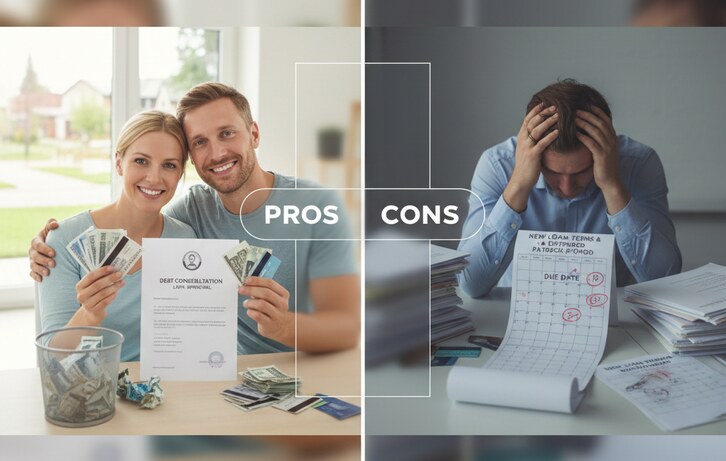
What is a Debt Consolidation Loan?
A debt consolidation loan is essentially a new loan you take out to pay off several other smaller debts. Instead of owing money to multiple lenders, you'll owe money to just one, typically at a fixed interest rate. This can include credit card debt, medical bills, store financing, and even other personal loans. The main idea is to streamline your payments and, ideally, reduce the total interest you pay over time.
For example, if you have three credit cards with balances of \$3,000, \$2,000, and \$1,500, and you qualify for a \$6,500 debt consolidation loan, you would use that new loan to pay off those three credit cards in full. From then on, you'd make one payment to your new debt consolidation lender instead of three separate payments to the credit card companies.
Pros of Debt Consolidation Loans
There are several compelling reasons why people choose to consolidate their debts:
Simpler Payments: The biggest benefit for many is having just one monthly payment to track. This reduces the chances of missing a payment, which can hurt your credit score and lead to late fees.
Potentially Lower Interest Rates: If you have good credit, you might qualify for a consolidation loan with a lower interest rate than what you're currently paying on your credit cards. Over time, this can save you a significant amount of money.
Fixed Interest Rates: Most personal loans used for consolidation have fixed interest rates. This means your payment won't change even if general interest rates go up, offering stability and predictability to your budget.
Clearer Path to Debt Freedom: Seeing one clear payoff date can be very motivating. It helps you understand when you'll truly be debt-free.
Improved Credit Utilization: By paying off revolving credit (like credit cards), your credit utilization ratio (how much credit you're using versus how much you have available) can decrease, which can positively impact your credit score.
Cons of Debt Consolidation Loans
While attractive, debt consolidation loans aren't without their downsides:
You Still Have Debt: A consolidation loan doesn't erase your debt; it just reorganizes it. If you don't change the spending habits that led to the original debt, you could end up in more debt.
Interest Rates Might Not Be Lower: If your credit score isn't strong, you might not qualify for an interest rate much lower than what you're currently paying, or even a higher one.
Fees and Charges: Some consolidation loans come with origination fees or other charges that can eat into your savings. Always read the fine print.
Longer Repayment Period: While a longer repayment period can lead to lower monthly payments, it might also mean you pay more in interest over the life of the loan.
Risk of Further Debt: After paying off credit cards, you might be tempted to use them again. If you do, you'll be managing your new consolidation loan payment plus new credit card debt.
Is a Debt Consolidation Loan Right for You?
Considering a debt consolidation loan requires a honest look at your financial situation and spending habits. It's most effective if:
You have a good credit score, which increases your chances of getting a favorable interest rate.
You're disciplined and committed to changing the financial behaviors that led to your debt.
You've calculated that the new loan will genuinely save you money in interest or make your monthly payments more manageable without extending the repayment period excessively.
If you're struggling, non-profit organizations like the National Foundation for Credit Counseling (NFCC) or the Financial Counseling Association of America (FCAA) can offer free or low-cost credit counseling, and they can help you explore all your debt relief options, not just consolidation loans.
Next Steps
Before applying for any loan, gather all your debt information: balances, interest rates, and minimum payments. Shop around among different lenders – banks, credit unions, and online lenders – to compare interest rates and fees. Understand the total cost of the loan and ensure it aligns with your financial goals.